
Home Essentials
Living Spaces
🔥 THIS WEEK
Best Home Deals This Week
Explore top-rated home essentials and trending smart products.
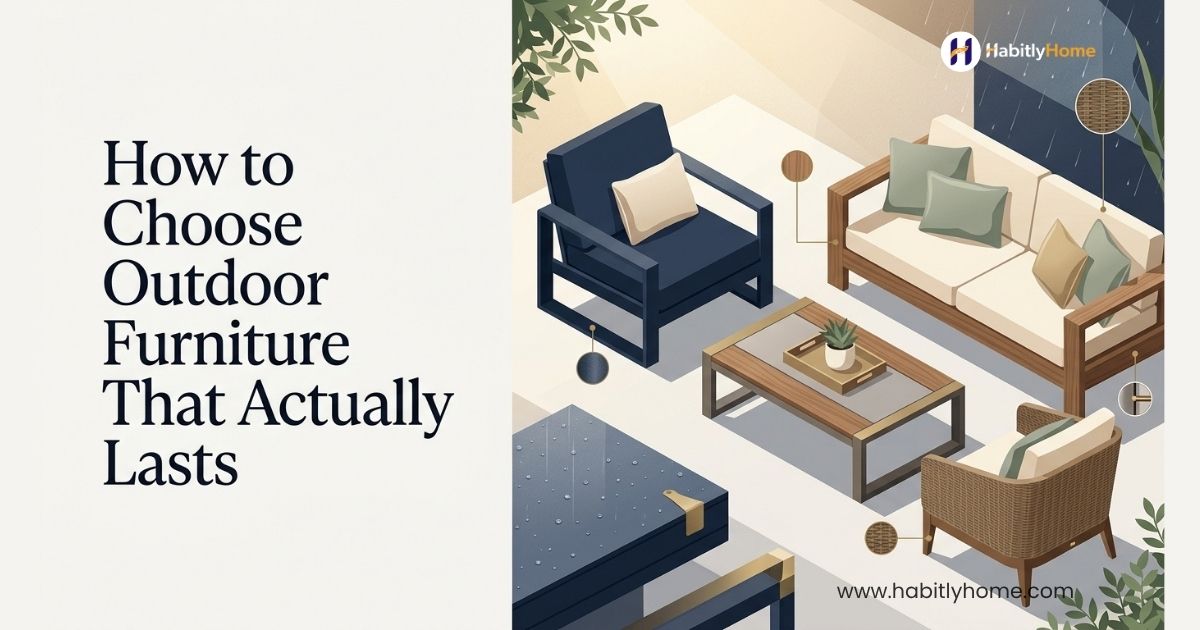
How to Choose Outdoor Furniture That Actually Lasts To choose outdoor furniture that lasts, start with the weather your furniture will actually face. The best materials for outdoor furniture are not identical for every climate, and a weather resistant outdoor furniture guide should consider rain, sun, humidity, wind, temperature changes and how much maintenance you are willing to do.
modern-living-room-decor-ideas-home-style-habitlyhome.jpg
Start With Your Climate The best materials for outdoor furniture depend on exposure, maintenance expectations and the climate around the home. A weather resistant outdoor furniture guide should distinguish resistance to rain from resistance to prolonged sun, humidity or salt air. Outdoor furniture makes a promise that a surprising number of pieces fail to keep. It looks great in the showroom or in a product photo, sits outside through one season, and by the following year is fading, warping, or falling apart in ways that feel disappointing given what it cost.
The difference between outdoor furniture that lasts for many years and furniture that needs replacing within a season almost always comes down to a handful of factors that are easy to overlook when you are shopping based on appearance alone. This guide walks through what actually determines how long outdoor furniture lasts, so you can make a genuinely informed choice before you buy, rather than finding out the hard way after a single summer.
Understand That Material Matters More Than Style It is easy to be drawn to outdoor furniture based purely on how it looks, but material is by far the biggest factor in how well a piece holds up to real weather conditions over time. Different materials handle sun, rain, and temperature swings very differently, and understanding these differences before buying prevents a lot of disappointment later. current trend.
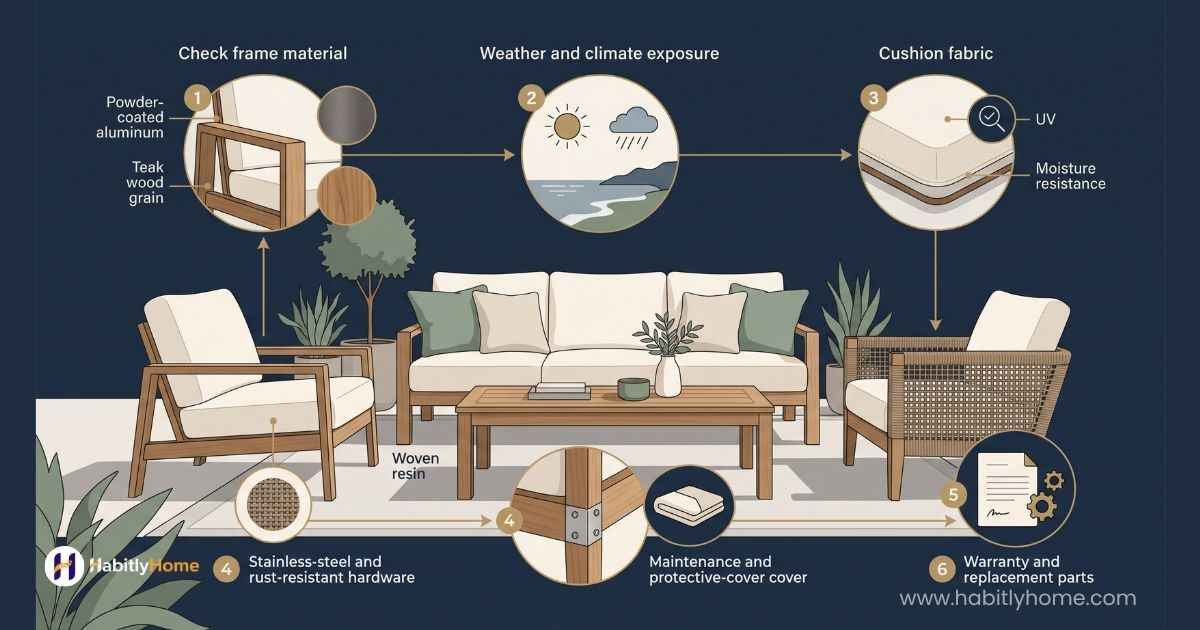
Aluminum is one of the most reliable materials for long term outdoor use. It does not rust the way traditional steel does, holds up well to both sun and moisture, and is light enough to move around easily when needed. Powder coated aluminum in particular resists chipping and fading better than many other metal finishes, making it a strong choice for furniture that will be exposed to the elements year round.
Teak and other dense hardwoods are prized for outdoor furniture because of their natural oil content, which provides genuine resistance to moisture and rot without requiring heavy chemical treatment. Properly cared for teak furniture can last for decades, though it does require occasional maintenance, either regular oiling to maintain its original color or accepting the natural silvery gray patina it develops over time if left untreated, which some people actually prefer aesthetically. Useful outdoor furniture buying tips include checking hardware, drainage, replacement cushions and the availability of covers.
Synthetic wicker, sometimes called resin wicker, has become a popular alternative to natural wicker specifically because it resists the cracking, fading, and moisture damage that natural rattan or wicker struggles with outdoors. When shopping for this style, it is worth checking the quality of the resin used, since cheaper synthetic wicker can still become brittle and prone to snapping after a few years of sun exposure, while higher quality versions genuinely hold up for many seasons.
Wrought iron offers a classic, sturdy look and genuine durability against wind and general wear, but it does require more maintenance than aluminum, since it is prone to rust if the protective coating is scratched or worn away. For anyone drawn to this style, checking for a genuine weatherproof powder coating, rather than just painted iron, makes a meaningful difference in long term durability. If you want to know how to choose outdoor furniture that lasts, compare materials with the exact weather exposure of your space.
modern-living-room-decor-ideas-home-style-habitlyhome.jpg
Not Just the General Category Outdoor furniture that performs well in one climate can struggle significantly in another, which is worth thinking through honestly before buying rather than assuming any furniture labeled outdoor is equally suited to every environment. In consistently rainy or humid climates, materials with strong moisture resistance, aluminum, teak, and quality synthetic wicker, tend to outperform anything with exposed untreated wood or unprotected metal, since prolonged moisture exposure is where most premature furniture failure actually happens.
In climates with intense, sustained sun exposure, fading resistance becomes the bigger concern, and it is worth looking specifically at UV resistant finishes and fabrics, since standard outdoor fabric can fade noticeably within a single intense summer without this protection. For anyone in a climate with genuine seasonal extremes, harsh winters alongside hot summers, furniture that can handle both temperature swings without becoming brittle in the cold or warping in the heat is worth prioritizing over furniture optimized for just one type of weather condition. A durable patio furniture guide should consider how easily each material can be cleaned and stored during severe weather.
Do Not Overlook the Fabric and Cushions Furniture frames tend to get most of the attention when shopping for outdoor pieces, but fabric and cushions are often the first thing to show wear, sometimes long before the frame itself shows any signs of aging. Standard indoor fabric has no place outdoors, it will fade, mildew, and deteriorate quickly regardless of how good the frame underneath it is. humidity and winter storage separately.
Solution dyed acrylic fabric is widely considered the standard for genuinely durable outdoor cushions and upholstery, since the color is embedded throughout the fiber itself rather than applied as a surface treatment, which makes it significantly more fade resistant than standard printed or dyed outdoor fabric.
It is also worth checking whether cushion foam is specifically designed for outdoor use, quick drying, mildew resistant foam performs dramatically better after rain than standard cushion foam, which can hold moisture and develop mildew within its core even if the outer fabric looks fine. Hardware Quality Is an Easy Thing to Overlook The screws, bolts, and joints holding outdoor furniture together rarely get much attention while shopping, but they are frequently where cheaper furniture fails first.
Standard steel hardware left exposed to moisture will rust over time, sometimes staining the furniture itself in the process, and rusted hardware can eventually cause structural joints to loosen or fail entirely. Stainless steel or specifically coated, rust resistant hardware is worth looking for, particularly on furniture that will remain outside year round rather than being stored during off seasons. This is a detail that rarely appears prominently in product descriptions, so if it matters to you, it is worth checking specifically or reaching out to ask before purchasing higher value pieces.
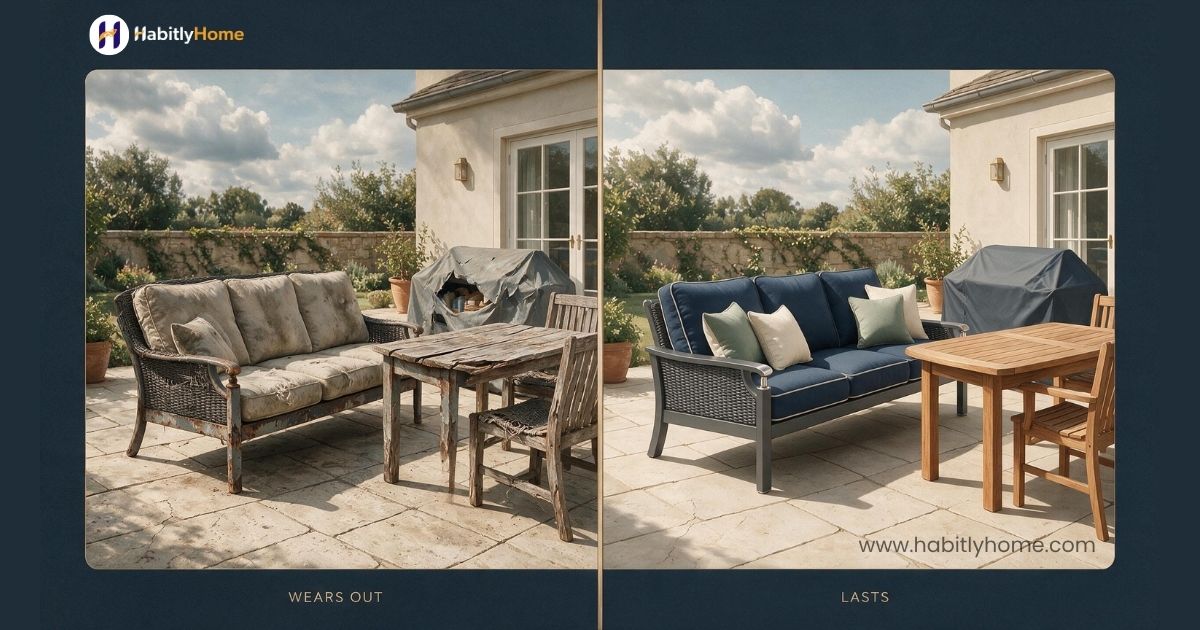
Consider direct sun, rain, humidity and seasonal storage before choosing materials for an outdoor setting.
This depends largely on priorities rather than one material being universally superior. Aluminum offers exceptional durability, low maintenance, and genuine longevity, along with being lightweight enough to rearrange easily, making it an excellent choice for anyone who wants a low maintenance, long term investment.
Quality synthetic wicker offers a different aesthetic, often considered warmer and more traditional looking, and modern synthetic versions have closed much of the durability gap that made natural wicker a poor outdoor choice in the past, though it generally still requires slightly more care than aluminum to maximize its lifespan.
Set a Realistic Budget Based on How You Actually Use the Space fabric, hardware and drainage. Not every household needs premium, decades lasting outdoor furniture, and it is worth being honest about how the space actually gets used before over investing. A patio used daily through most of the year justifies a higher investment in genuinely durable materials, since the furniture will see significant wear regardless of quality. A rarely used outdoor space, or one only used seasonally, may reasonably justify a more modest budget, since even mid range furniture, properly covered and maintained during off periods, can provide good value for lighter, less frequent use.
For anyone in a climate with a genuine off season, proper storage during that period meaningfully extends the lifespan of even the most durable outdoor furniture. Where possible, moving furniture into a garage, shed, or covered storage area during extended periods of harsh weather, particularly winter in colder climates, reduces exposure to the freeze and thaw cycles that are especially hard on both wood and certain metal finishes. When indoor storage is not practical, high quality, breathable outdoor furniture covers are the next best option.
It is worth choosing covers specifically designed to allow some airflow rather than fully sealed plastic covers, since trapped moisture underneath a completely sealed cover can actually cause more harm than leaving furniture uncovered in some cases, particularly through mildew development in fabric and cushions.
Cushions and fabric components benefit the most from being brought indoors during off seasons regardless of how the frame itself is handled, since these components are consistently the first to show wear from prolonged weather exposure. A dedicated storage bin or indoor closet space set aside specifically for seasonal cushion storage is a small investment that noticeably extends how long the softer components of outdoor furniture stay in good condition. and how the furniture will be used. marketing claims and more about predictable wear. current trend.

Check fabric care instructions, cushion drying time and storage needs to match your local climate.
How do you protect outdoor furniture from weather?
Is aluminum or wicker better for outdoor furniture?
What is the best outdoor furniture for rainy climates?
Learn how climate, frame material, cushion fabric, hardware and seasonal care affect outdoor furniture. Use the practical checks in this guide to compare durability and maintenance before committing to a set.

Plan a small living room around its real purpose, doorways and walking routes. Compare sofa sizes, flexible furniture, lighting and rug placement before buying anything, so the layout feels comfortable rather than crowded.

This beginner guide explains how to build a smart home in stages. Choose devices around real needs, check ecosystem compatibility, protect your network and understand which features may stop working during a Wi-Fi or internet outage.

Learn how to organize a small kitchen by clearing clutter, using vertical space and giving everyday tools a practical home. These realistic changes help improve access and counter space without a renovation.
No account yet?
Create an Account