
Home Essentials
Living Spaces
🔥 THIS WEEK
Best Home Deals This Week
Explore top-rated home essentials and trending smart products.
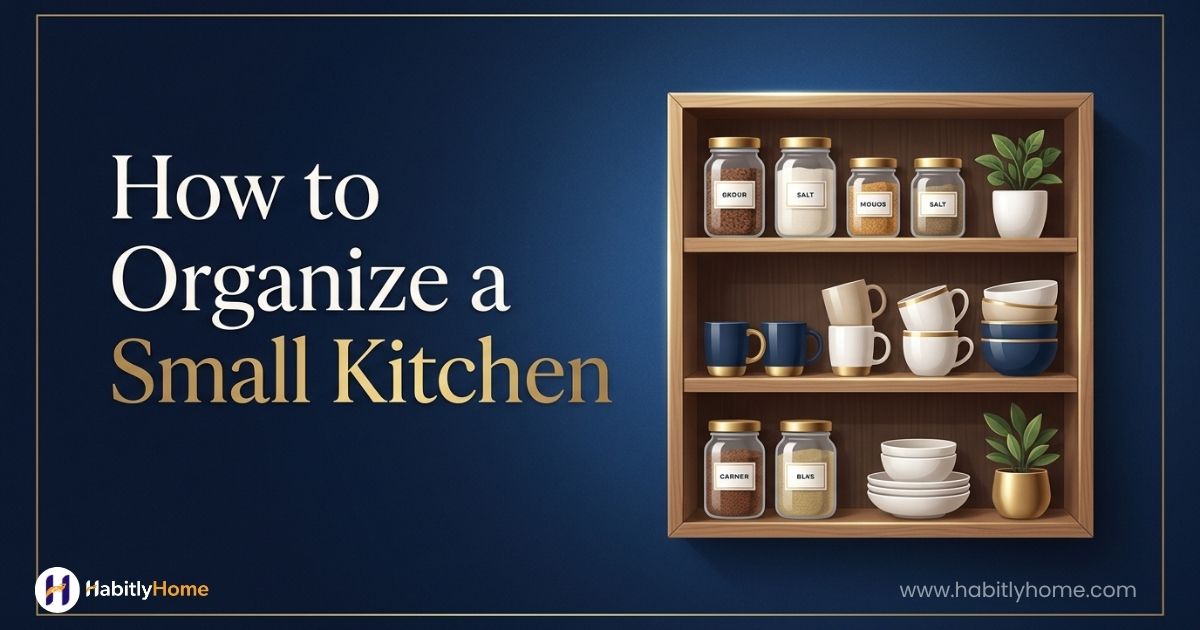
A small kitchen has a way of testing your patience in ways a bigger space never does. We often get confused thinking how to organize a small kitchen when we do not have much space. Every drawer feels like it is fighting for the same six inches, counter space disappears the moment you start actually cooking, and it can feel like no matter how much you tidy up, the room never quite feels under control. The good news is that a small kitchen does not need a renovation to function well.
Most of the frustration comes from working against the space instead of working with it, and a handful of practical changes can make a real difference without spending a fortune or knocking down a single wall. This guide walks through how to actually organize a small kitchen in a way that holds up in everyday life, not just for the first week after a big tidy up.
Before buying a single storage solution, it helps to take stock of what is actually in your kitchen right now. Most small kitchens are not overcrowded because they are small, they are overcrowded because they are storing things that rarely get used. Appliances bought for one recipe two years ago, mismatched containers, duplicate utensils, all of it takes up real space that a small kitchen simply cannot spare.
Go through every cabinet and drawer once, and be honest about what you have reached for in the last three months. Anything that has not been touched in that window is a strong candidate to be stored elsewhere in the home, donated, or removed entirely. This single step, done properly, often frees up more usable space than any organizer or gadget you could buy afterward, because you are no longer trying to fit storage solutions around clutter that should not be there in the first place.
cozy-home-interior-decor-lifestyle-ideas-habitlyhome.jpg
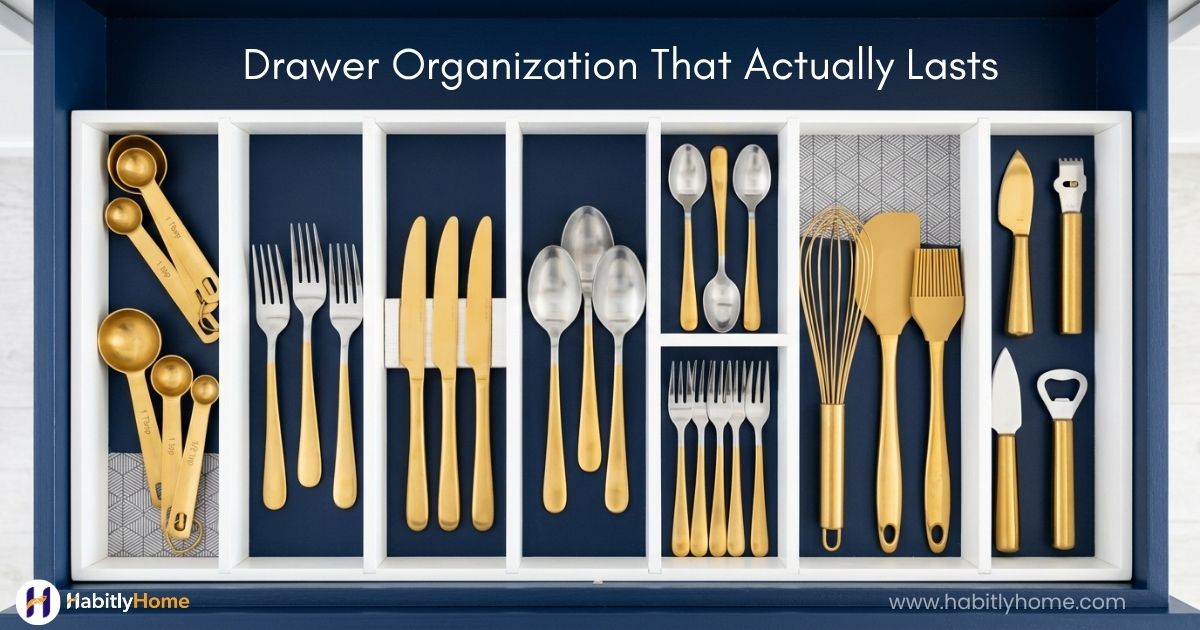
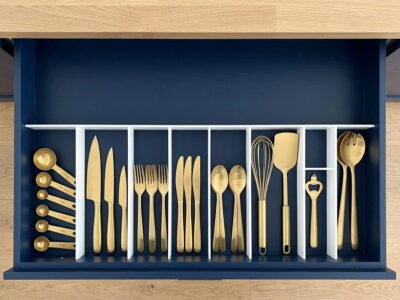
Drawers in a small kitchen tend to become a catch all for everything that does not have an obvious home, which quickly turns into the kind of drawer you have to dig through every time you need something specific. Drawer dividers solve this more effectively than almost any other single purchase, separating utensils, tools, and smaller items into defined sections so you can see and reach what you need without pulling everything out first.
It is worth dedicating one drawer specifically to the tools you use daily, a good knife, a peeler, measuring spoons, rather than mixing daily essentials in with items you use once a season. This small habit alone significantly cuts down on the time spent searching mid recipe, which matters more than it sounds like it should when you are trying to cook efficiently in a limited space.
The area under the sink is one of the most commonly wasted spaces in a small kitchen, usually because pipework breaks up the space in a way that makes standard storage awkward to fit. Rather than leaving this as a loose pile of cleaning supplies, a simple stackable or sliding organizer designed specifically for under sink use can make this space genuinely functional again.
Command hooks on the inside of the cabinet door can also hold spray bottles or gloves, keeping them off the cabinet floor entirely and freeing up more room for larger items like bins or bulk cleaning supplies.
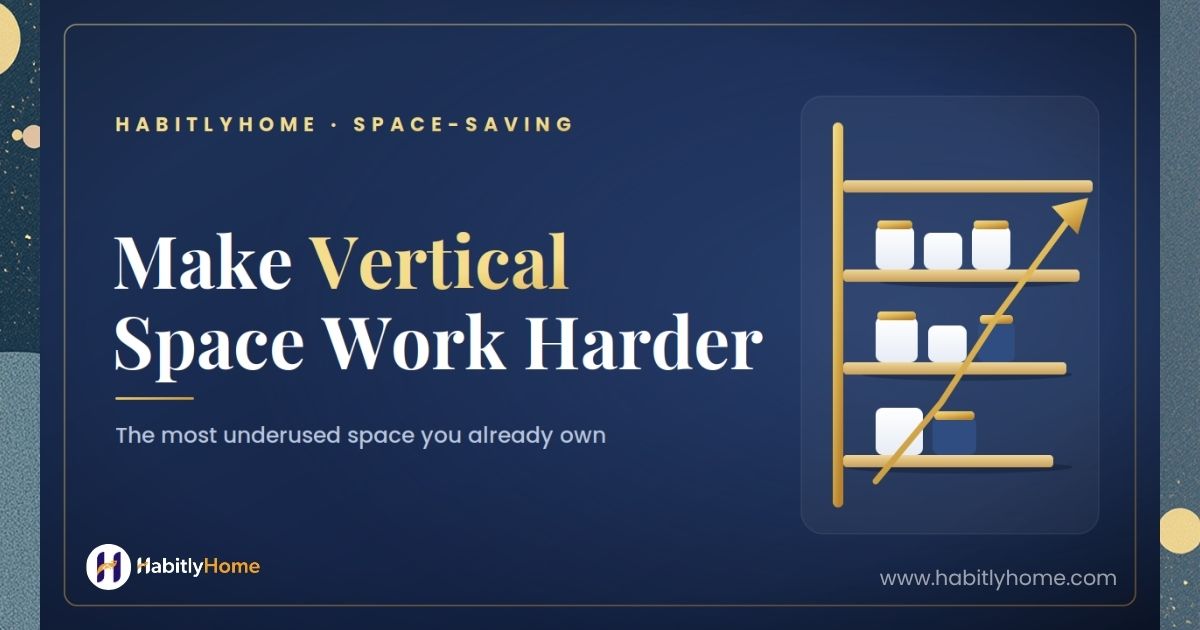
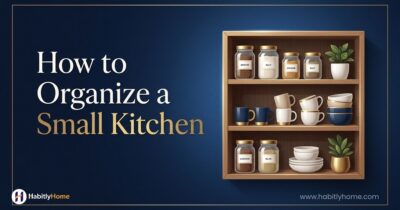
Small kitchens are almost always limited in floor and counter space, but the vertical space above counters and inside cabinets is usually underused. This is one of the highest impact changes you can make. Wall mounted shelving above counters can hold everyday items like spices, oils, or frequently used mugs, freeing up cabinet space for less frequently accessed items.
Inside cabinets, stackable shelves or tiered organizers let you use the full height of a cabinet instead of leaving a gap of dead air above every plate or bowl. Pegboards mounted on an open wall section are particularly useful for pots, pans, and utensils, since hanging these items frees up an entire drawer or lower cabinet that would otherwise be dedicated to them.
Even the inside of cabinet doors can become useful storage. A simple over the door organizer can hold cutting boards, foil, cling film, or cleaning supplies, all items that otherwise take up prime real estate inside a cabinet.
cozy-home-interior-decor-lifestyle-ideas-habitlyhome.jpg
One of the fastest ways a small kitchen becomes cluttered is through single purpose gadgets, tools that do exactly one job and nothing else, then sit unused for most of the year. A small kitchen benefits enormously from prioritizing multi purpose tools instead. A good chef’s knife can replace half a dozen specialty knives. A single sturdy mixing bowl set can replace several mismatched bowls collected over time. A cast iron pan can move from stovetop to oven, reducing the need for separate bakeware in some cases.
This is not about giving up convenience, it is about being deliberate with what earns a place in a kitchen that has limited room to spare. Every gadget that does only one narrow job is square footage that a small kitchen genuinely cannot afford to give up easily.
Counter space in a small kitchen is often the single most valuable resource in the entire room, and yet it is usually the first place clutter accumulates. Mail, keys, random items that do not have a home elsewhere in the house, all of it tends to land on the kitchen counter simply because it is a flat, accessible surface. Protecting counter space starts with giving every item that does not belong in the kitchen an actual home elsewhere, even if that home is just a small tray by the front door for keys and mail.
Within the kitchen itself, it is worth being selective about which appliances stay out permanently. A coffee machine used daily earns its spot on the counter. A stand mixer used twice a year probably does not, and is better stored in a cabinet even if it means a little extra effort to pull it out on the occasions it is actually needed.
An organized kitchen tends to stay organized far longer when it is obvious where everything belongs, both to you and to anyone else in the household. Simple labels on containers, shelves, or drawer dividers remove the guesswork and make it far easier to put things back in the right place after use, rather than wherever there happens to be space in the moment.
This matters more in a small kitchen than a larger one, because there is very little margin for things drifting out of place. In a bigger kitchen, a slightly disorganized shelf might go unnoticed for weeks. In a small kitchen, that same disorganization becomes obvious almost immediately, since there is nowhere else for the overflow to quietly disappear to.
smart-kitchen-gadgets-modern-kitchen-tech-habitlyhome.jpg
If floor space allows even a small footprint, a rolling kitchen cart can add a genuinely useful extra layer of storage without requiring any permanent installation. These carts work well for extra pantry items, small appliances used occasionally, or as additional prep space when you need it, and can be tucked into a corner or even a nearby hallway when not actively in use.
This kind of flexible, movable storage is particularly useful for small kitchens because it adapts to whatever you need most at a given time, rather than being a fixed structure dedicated to one single purpose.
In this case revisit the system every few months. Kitchen organization is not a one time project, it is a system that needs occasional revisiting as habits and needs change. What worked perfectly six months ago might not fit how you are cooking now, particularly if your household size, routine, or cooking habits have shifted even slightly.
Setting a simple reminder every few months to briefly reassess what is working and what has quietly become clutter again keeps a small kitchen functioning well over the long term, rather than slowly sliding back into the same disorganization that prompted the original clean up.
Even with the best intentions, a few common habits quietly undo an otherwise well organized small kitchen. The first is buying storage products before actually measuring the space they need to fit. A beautiful set of stackable containers or a drawer organizer that does not quite fit the space it was bought for ends up creating more clutter than it solves, since it either gets shoved in anyway at an awkward angle or abandoned in another cabinet entirely.
The second common mistake is treating organization as a one time event rather than an ongoing habit. It is easy to spend a weekend thoroughly organizing a small kitchen, feel great about the result, and then slowly let things drift back to how they were simply because putting an item back in its proper place takes a few seconds longer than leaving it on the counter. Small kitchens have almost no tolerance for this kind of drift, since there is no spare space to absorb the accumulation the way a larger kitchen might.
A third mistake is buying appliances based on features alone without considering their physical footprint relative to how often they will actually be used. A large stand mixer or an oversized coffee machine might have excellent reviews, but if it permanently occupies a third of your counter space and only gets used occasionally, it may not be the right choice for a small kitchen specifically, even if it would be a perfectly reasonable purchase in a larger space.
Beyond storage and organization, the physical layout of how you move through a small kitchen matters more than people often realize. The classic kitchen work triangle, the relationship between your stove, sink, and refrigerator, still applies in a small kitchen, and even minor adjustments to how these zones relate to each other can meaningfully change how efficiently the space functions.
If your small kitchen layout is fixed and cannot be physically altered, focus instead on keeping the path between these three zones as clear as possible. This often means being especially disciplined about not letting items accumulate on the counter space directly between the stove and sink, since this is usually the most frequently used stretch of counter in the entire kitchen and the one most likely to become a bottleneck during actual cooking.
smart-kitchen-gadgets-modern-kitchen-tech-habitlyhome.jpg
Rolling or portable elements can also help a fixed layout feel more flexible. A small rolling cart, mentioned earlier for storage, can double as additional temporary counter space during meal preparation and then be moved aside afterward, effectively giving a small kitchen more usable prep space than its fixed counters alone would suggest.
Lighting also plays a bigger role in how a small kitchen functions than it might initially seem. Under cabinet lighting, in particular, adds usable task lighting directly onto counter space without requiring any additional floor or counter footprint, and it genuinely helps with both the practical experience of cooking and the overall sense of the kitchen feeling well designed rather than simply cramped.
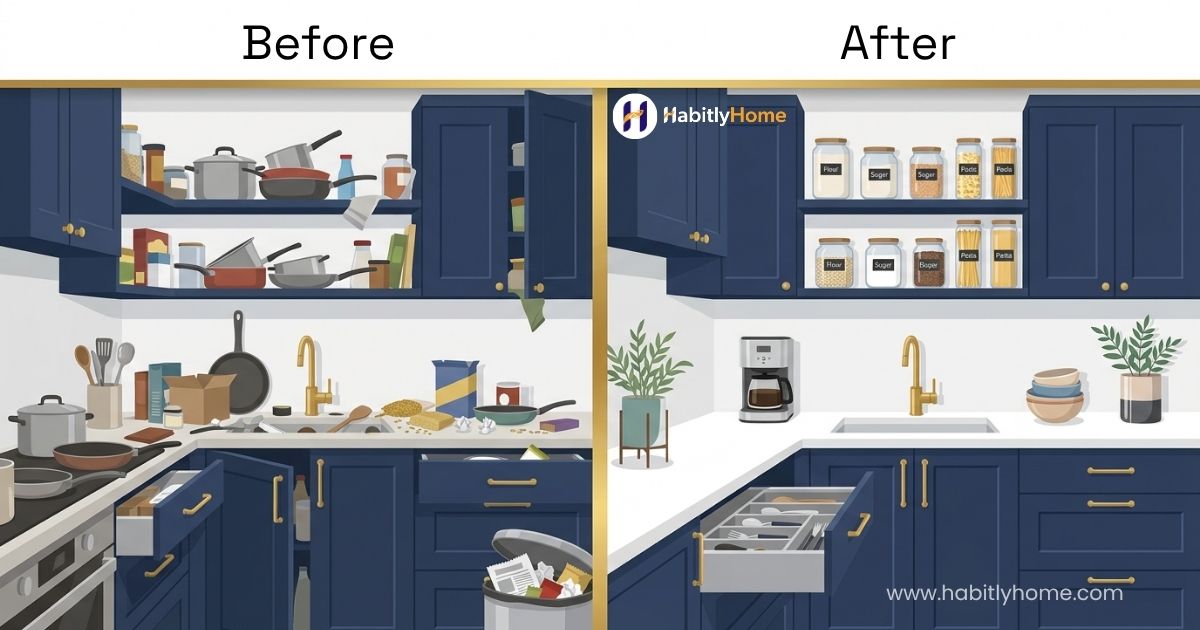
A small kitchen does not have to feel like a constant compromise. Most of what makes a kitchen feel cramped and frustrating comes down to how the existing space is being used, not the size of the room itself. Clearing out what you do not need, making better use of vertical space, organizing drawers with intention, and being selective about what earns permanent counter space all add up to a kitchen that genuinely works for how you actually live and cook, without needing a single wall knocked down or a major renovation budget.
Small changes, applied consistently, tend to outperform one big overhaul that is hard to maintain. Start with one area this week, whether that is a single overcrowded drawer or the space under your sink, and build from there.
A small kitchen has a way of testing your patience in ways a bigger space never does. We often get
Vivamus enim sagittis aptent hac mi dui a per aptent suspendisse cras odio bibendum augue rhoncus laoreet dui praesent sodales
A sed a risusat luctus esta anibh rhoncus hendrerit blandit nam rutrum sitmiad hac. Cras a vestibulum a varius adipiscing
When it’s about controlling hundreds of articles, product pages for web shops, or user profiles in social networks, all
No account yet?
Create an Account